
Wisdom teeth and impacted teeth
Impacted wisdom teeth and complex extractions
An impacted wisdom tooth may sit against the dental nerve or the neighbouring root. Planning it with a CT scan before going in is what separates a clean extraction from a complication.
Book an appointment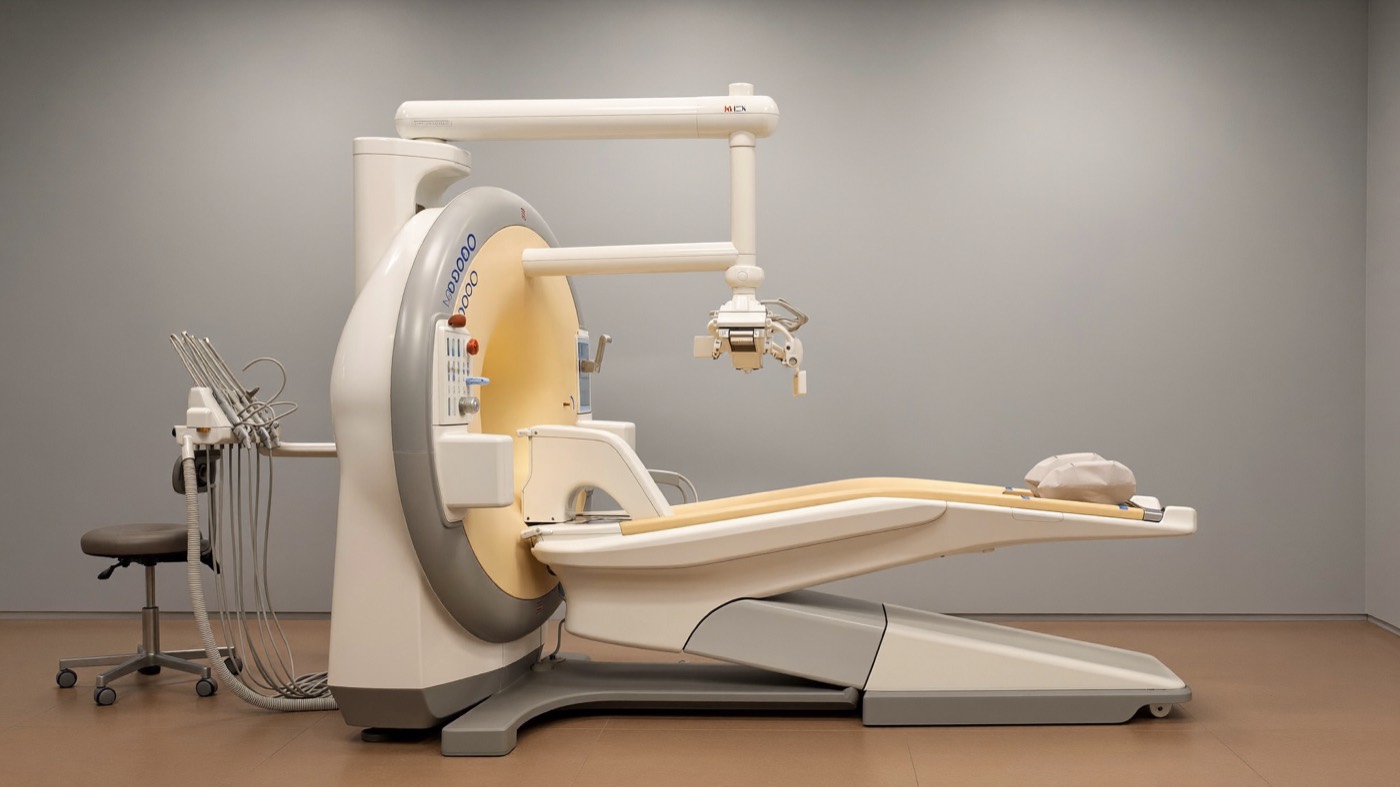
Why wisdom teeth cause so much trouble
Third molars are the last to come through, usually between sixteen and twenty-five, and often find the jaw already full. When there is not enough room they stay impacted inside the bone, partly erupted with some of the crown still covered by gum, or they come through tilted against the tooth in front.
A partly erupted molar is the worst possible hygiene scenario: there is an opening for bacteria and food to get in, but no way to clean it. That is where pericoronitis comes from, those episodes of swelling and pain at the back that come and go and tend to flare with stress or fatigue.
When the molar pushes at an angle against the second molar, the damage goes further: it can cause decay on the back surface of the neighbouring molar, at a point a brush cannot reach and where repair is difficult, and in some cases root resorption.
The inferior dental nerve and why a CT scan comes first
The inferior dental nerve runs inside the lower jaw, supplying sensation to the lip and chin. The roots of lower wisdom teeth can sit very close to that canal, and in some cases literally wrap around it.
On a panoramic X-ray, which is flat, roots overlapping the canal can look as though they touch it when they do not, or the reverse. Cone beam CT resolves that ambiguity: it shows the real relationship in three dimensions and allows the technique to be decided before going in.
When the proximity is extreme there are alternatives to full extraction, such as coronectomy: removing only the crown of the tooth and leaving the roots in place if they are not infected. It is a decision made with the images in front of you, explaining to the patient why.
Recovery: what is normal and what is not
Swelling is the expected reaction, not a complication. It usually builds over the first forty-eight hours, peaks around day two and eases from day three. Cold applied intermittently in the first hours, along with the prescribed anti-inflammatories, keeps it well controlled.
Limited mouth opening for a few days, some bruising on the skin and a small amount of blood mixed with saliva on the first night are also normal. A soft, cold diet for the first days, avoiding vigorous rinsing and not smoking are the three things that help most.
What is worth reporting is pain that rises rather than falls from day three or four, often radiating to the ear: that may be dry socket, which is treated at the clinic fairly easily. Also get in touch if there is a high fever, swelling that grows after three days or difficulty swallowing.
When it needs treating
- Repeated pain or swelling at the back of the jaw
- A wisdom tooth that came through crooked or only partly
- Decay or infection in a hard-to-reach molar
- Your orthodontist has asked for extractions to make space
- A canine or other tooth that never came through
- A cyst or lesion found on an X-ray
How we do it
-
1
3D scan first
We see exactly where the root sits relative to the inferior dental nerve and the maxillary sinus. That decides the technique.
-
2
Choosing anaesthesia
Local anaesthetic, sedation or general anaesthesia depending on the case and on how you cope with treatment.
-
3
Extraction
Surgical technique with sutures. Straightforward cases are done at the clinic; complex ones in a hospital theatre.
-
4
Guided recovery
Written instructions, an anti-inflammatory schedule and a review to remove sutures and check healing.
Frequently asked questions
Do wisdom teeth always have to come out?
No. If they have come through properly, can be cleaned and cause no trouble, there is no reason to remove them. It depends on position and symptoms.
How many days of swelling?
It usually peaks at two days and eases from the third. Cold and the anti-inflammatory schedule keep it well controlled.
Can I be asleep during the procedure?
Yes. Sedation and general anaesthesia are available for cases that need it or for patients who prefer it.
When can I go back to work?
After a simple extraction, the next day. For complex cases or general anaesthesia, allow several days.
What is pericoronitis?
It is infection of the gum partly covering a tooth that has not fully erupted. It hurts, swells and sometimes makes opening the mouth difficult. It can be controlled with treatment, but tends to recur while the tooth stays in that position.
Can I drive after the procedure?
With local anaesthetic, yes, once you feel well. With sedation or general anaesthesia, no: someone needs to come with you and you must not drive for the rest of the day.
Can all four wisdom teeth come out on the same day?
Yes, and it is often the most practical option under sedation or general anaesthesia: one recovery instead of four. Under local anaesthetic they are usually done side by side.
Will I lose sensation in my lip?
This is the complication people worry about most, and it is uncommon. When it happens it is usually temporary. The prior CT scan exists precisely to assess that risk beforehand and choose the technique accordingly.
Shall we talk?
Tell us what is going on and we will say whether this is your case or not. The first visit is about naming it.