TMJ, orthognathic and pathology
TMJ disorders and orthognathic surgery, with the same team
This is the part that until now had to be referred elsewhere. Joint, jaws and pathology of the facial region: cases needing medical training and an operating theatre, not only dental training.
Book an appointment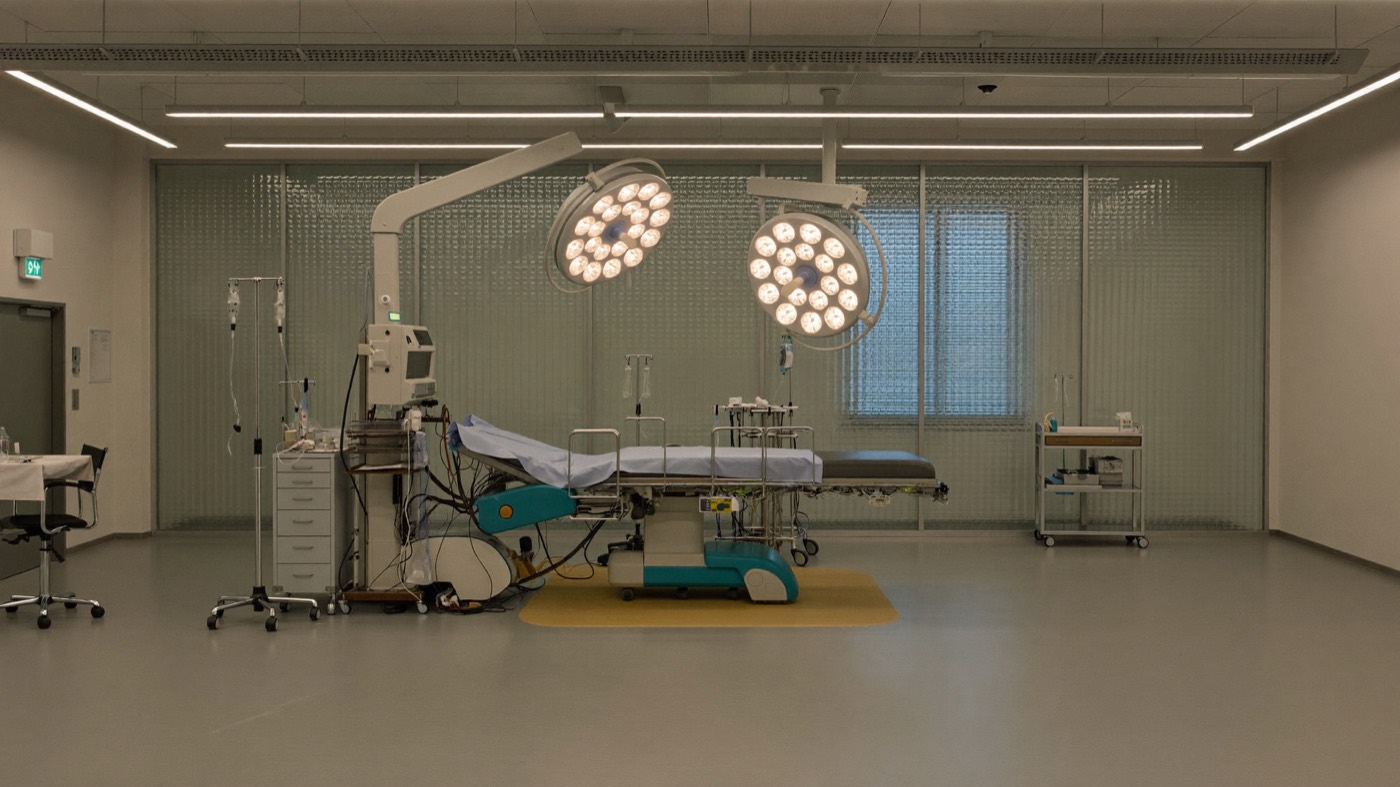
What the TMJ is and why it hurts
The temporomandibular joint connects the jaw to the skull, just in front of the ear. It is the only joint in the body that must work as a pair: both sides have to move together. Between the bone and the condyle sits a fibrocartilage disc that has to glide in sync every time you open your mouth.
When that disc slips out of place, the typical symptoms appear. Clicking on opening usually means the disc is snapping back into position; locking means it has stayed in front and is blocking full opening. There are also purely muscular presentations, where the pain comes from overloaded chewing muscles rather than the joint.
Telling a joint problem from a muscular one changes the treatment entirely, which is why the first appointment is above all an examination. In many cases what gets labelled as TMJ is in fact muscular tension linked to bruxism.
Why surgery is the last option for the TMJ
The great majority of patients with TMJ problems improve without an operating theatre. The first line is conservative: a splint to spread the night-time load, physiotherapy and controlled opening exercises, anti-inflammatories in the acute phase and, where needed, injections or botulinum toxin into the overloaded muscles.
When that does not resolve things after a reasonable period, there are minimally invasive options such as arthrocentesis: washing the joint with saline to clear inflammatory mediators and release adhesions. It is done with two needles and often as a day case.
Open joint surgery is reserved for a very small group of cases. Offering surgery as the first answer to TMJ pain almost always means skipping steps that would have worked.
Orthognathic surgery: when the problem is bone, not teeth
Orthodontics moves teeth within bone. When the mismatch is between the jaws themselves, for instance a jaw set too far back or a short upper jaw, moving only the teeth can camouflage the problem aesthetically but corrects neither the functional bite nor the facial profile.
In those cases orthognathic surgery is considered, surgically repositioning the jaws. It is planned in three dimensions from the CT scan and intraoral scan: the movement is simulated on screen, the facial outcome is previewed, and custom surgical splints are made to carry that plan into theatre.
It is a joint treatment with the orthodontist and runs over time, with an orthodontic phase before and another after. Alongside the bite, it often improves functional aspects such as nasal breathing and, in selected cases, sleep apnoea.
Oral pathology: when a lesion needs investigating
Benign lesions appear in the mouth all the time: ulcers, bites, irritation from a denture that rubs. Almost all resolve on their own within a week or two, and nothing is needed beyond removing the cause.
The criterion that raises concern is persistence. An ulcer, a white or red patch, a lump or a hardened area still unchanged after two or three weeks should be investigated, even if it does not hurt. In fact, the absence of pain is not a reassuring sign in this context.
Investigation often ends in a biopsy, a simple procedure under local anaesthetic. The vast majority of results are benign; the point of doing it is precisely to be able to say so with certainty and, in the minority of cases where it is not, to have got there early.
When it needs treating
- Pain on opening, clicking or locking of the jaw
- Bruxism that does not improve with a splint
- An open or crossbite that orthodontics alone cannot correct
- A jaw that sits well back or well forward
- A lump, patch or ulcer in the mouth that will not go away
- Recurrent swelling under the jaw or in front of the ear
How we do it
-
1
Diagnosis and imaging
Examination, 3D CBCT and, where needed, MRI to see the joint disc. We need to know what is happening before proposing anything.
-
2
Conservative options first
For the TMJ, a splint, physiotherapy or injections are often enough. Surgery is the last resort, not the first.
-
3
Virtual planning
For orthognathic surgery, jaw movement is planned on screen and custom surgical splints are manufactured.
-
4
Theatre and follow-up
Surgery takes place at Hospital Universitari General de Catalunya, HM Sant Jordi or Sanitas CIMA, with follow-up here.
Frequently asked questions
Does all of this need surgery?
No. Much TMJ pathology is controlled without surgery. Operating is reserved for cases that do not respond to conservative treatment.
What is orthognathic surgery?
Surgical correction of jaw position when the problem is not the teeth but the bone holding them. It is coordinated with your orthodontist.
Will my insurance cover it?
It depends on the company and policy. We have agreements with most of the main insurers; confirm before your visit.
Should I worry if a lesion was found?
Most mucosal lesions are benign. That is precisely why they are investigated: to confirm it with a biopsy where needed, and put your mind at rest.
Does a splint cure bruxism?
It does not stop it, but it protects. Bruxism has a central component a splint does not touch; what it does is spread the force and prevent tooth wear and joint overload.
Does botulinum toxin help jaw pain?
In selected cases of myofascial pain with masseter hypertrophy, botulinum toxin reduces contraction strength and improves pain. It is not the answer for everyone and does not replace a splint.
How long is recovery from orthognathic surgery?
Returning to normal life usually takes two to four weeks, with an adapted diet for longer. Full stabilisation and the final result are assessed after some months.
Do I need a referral or can I come directly?
Either. Many patients are referred by their dentist or orthodontist, and others book directly. If you already have imaging or a report, bring it to the first appointment.
Shall we talk?
Tell us what is going on and we will say whether this is your case or not. The first visit is about naming it.